Reference
AI Search Statistics for 2026
The numbers that actually matter for AI search — adoption, the zero-click shift, conversion quality, and what makes content get cited — each with its source. A living reference we keep current as new, credible data lands.
Updated September 2026 · sourced & maintained
How we handle numbers: every figure below is attributed to its source. Where a stat is a vendor benchmark or a correlation rather than a proven cause, we say so in the note. If you cite this page, please cite the original source alongside it.
Adoption & scale
AI search has moved from novelty to daily habit for hundreds of millions of people.
weekly active ChatGPT users reported in late 2025–early 2026
Source: OpenAI
people reached by Google's AI Overviews each month
AI Overviews now appear above a large share of informational results.
Source: Google
of shoppers have used generative AI for online shopping
Source: Adobe (2025)
of shoppers use generative AI for product research
Source: Adobe (2025)
of B2B buyers used generative AI during a recent purchase
Source: Gartner (2025 survey)
The zero-click shift
As answers replace links, more searches end without a click to any website — which changes what visibility even means.
of Google searches ended without a click by 2024–2025
AI Overviews and AI Mode push this share higher still.
Source: SparkToro / Datos
of Google AI Mode sessions are zero-click
The answer is complete on the results surface, so the user never leaves.
Source: Industry analyses (2025–2026)
Traffic quality & conversion
There's less raw traffic — but the visitors who do arrive from an AI-cited answer tend to be pre-qualified.
higher conversion commonly cited for AI-referred visitors vs. traditional organic
Vendor benchmarks; exact multiples vary by source and industry.
Source: Multiple 2025–2026 vendor studies
What makes content get cited
Two research-backed signals stand out for whether an engine pulls you into its answer.
lift in a page's visibility in generative answers from adding quotations, statistics, and citations
The core evidence behind answer-first, evidence-backed content (AEO).
Source: Princeton, KDD 2024 (peer-reviewed)
stronger correlation of web-wide brand mentions with AI-search visibility than backlinks
Correlation, not proven cause — but a clear signal that mentions matter (GEO).
Source: Ahrefs study of ~75,000 brands
What the numbers add up to
Put together, the data tells one story: less traffic, but dramatically better traffic — flowing to whichever business the AI names. Adoption is mainstream, most searches now end without a click, and the visitors who do arrive from an AI answer convert better because they're pre-qualified. That makes being cited and recommended the goal, and the two levers that earn it — answer-first evidence (AEO) and web-wide mentions (GEO) — are measurable, not mysterious.
Frequently asked questions
How many people use AI search?
Usage is now in the hundreds of millions. OpenAI reported roughly 800–900 million weekly active ChatGPT users in late 2025 to early 2026, and Google's AI Overviews reach more than 2 billion people a month. On the buying side, Adobe found about 39% of shoppers have used generative AI for shopping and 53% for product research (2025), and Gartner found 45% of B2B buyers used generative AI during a recent purchase.
What percentage of searches are zero-click?
By 2024–2025, roughly 60% of Google searches ended without a click (SparkToro/Datos), and the rise of AI Overviews and AI Mode pushes that share higher. The practical implication: visibility is shifting from earning a click toward being the source the AI names in a zero-click answer.
Do AI-referred visitors convert better?
Multiple 2025–2026 vendor studies find AI-referred visitors convert several times better than traditional organic — commonly cited around four to five times — because they arrive pre-qualified by the AI's answer. These are vendor benchmarks and exact multiples vary by source and industry, but the direction is consistent: fewer but higher-intent visitors.
What makes a page more likely to be cited by AI?
Two research-backed signals: answer-first, evidence-backed content, and web-wide brand mentions. A peer-reviewed Princeton study (KDD 2024) found that adding quotations, statistics, and citations can raise a page's visibility in generative answers by up to about 40%. An Ahrefs study of ~75,000 brands found brand mentions correlated with AI-search visibility roughly three times more strongly than backlinks.
From statistics to a system
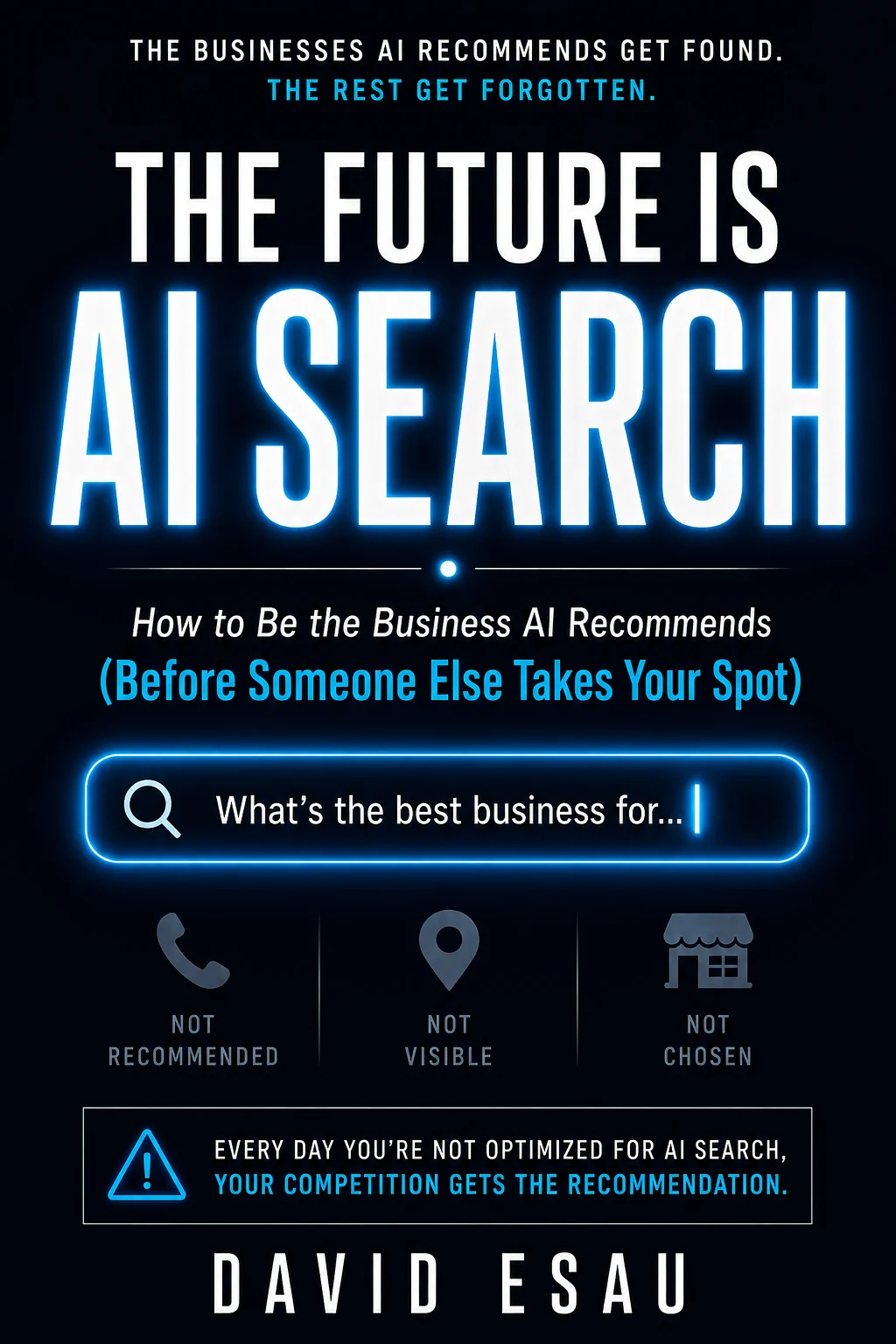
The Future Is AI Search turns the data into a playbook — how to become the business AI recommends in your market. $25.00, free US shipping, $5 per copy to the AFSP.